
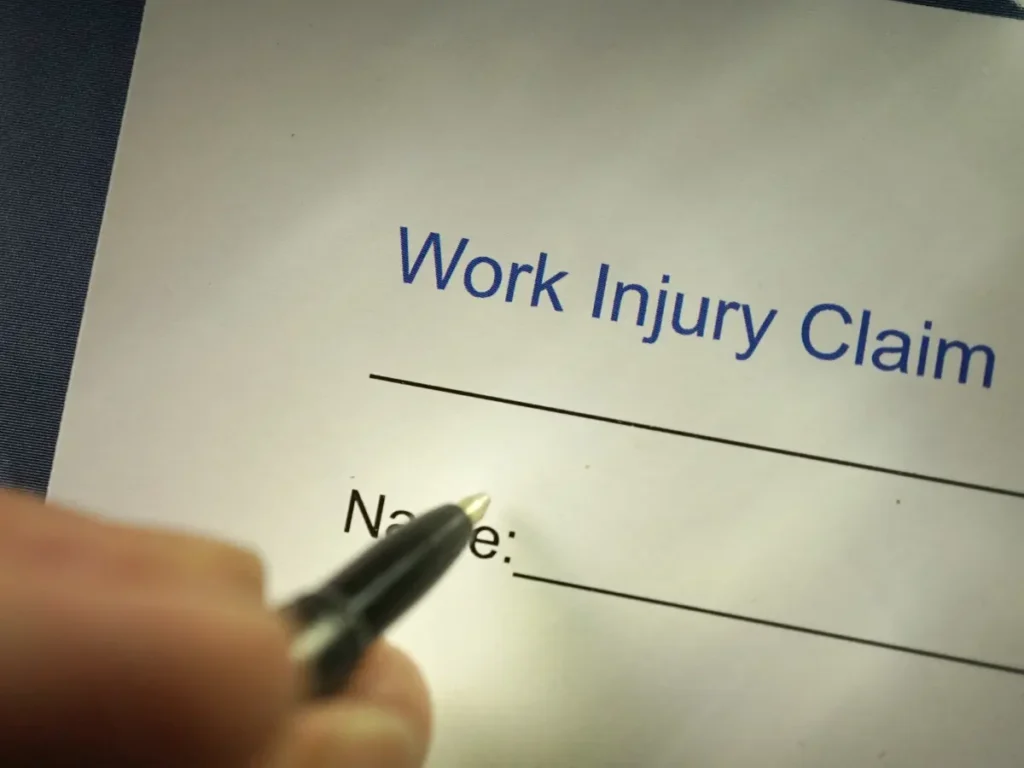
If you are injured in a car accident while performing your job duties, you may assume you either have a workers’ compensation claim, or a personal injury claim against the negligent driver who caused the accident, but not both. In Montana, that is not necessarily true. If another negligent driver caused the accident, you may have a claim against that driver, in addition to a claim under the Montana Workers’ Compensation Act. Failing to pursue both claims on a timely basis can result in real money being left on the table.
Here’s how the two claims work, and why the distinction matters.
Why Workers’ Comp Is Not Always Your Only Remedy
Montana’s workers’ compensation system is built on a trade-off: it is a no-fault system, which means you do not have to prove your employer did anything wrong before you can receive medical and wage loss benefits for a work-related injury. In exchange, you generally will not have a “tort” claim against your employer, which is based in negligence. Workers’ compensation is, with few exceptions, the exclusive remedy against an employer for a workplace injury. In addition, workers’ compensation does not compensate injured workers for general damages, such as pain and suffering, or a permanent alteration of one’s way of life.
But that trade-off only applies to your employer. If someone other than your employer or co-worker negligently caused your injury (such as another driver who ran a red light, a contractor who left a hazard at a job site, or a manufacturer who sold defective equipment) that person or company is not protected by the work comp exclusivity rule. They can be held accountable through a separate personal injury claim.specific facts of each case. If you have questions about your situation, consult with an attorney.
The Car Accident Scenario
This situation often arises in work-related auto accidents. If another driver causes a crash when you’re making a delivery, traveling between job sites, or running an errand for your employer, you may have two claims to compensate you for your injuries and damages (to include your general damages).
One is workers’ compensation claim, for which your employer obtains insurance, and which covers medical treatment and a portion of lost wages regardless of who caused the accident.
The other is a personal injury claim against the at-fault driver, which can cover those “general damages” work comp does not, in addition to medical expenses and lost wages.
Both claims can proceed at the same time, and they do not negate one another. However, each claim has its separate filing deadline, and you need to be aware of those deadlines in order to protect your rights.
The Car Accident Must Occur While You Are Actively Working
Workers’ compensation covers you for accidents that occur while you’re actively performing your job duties. If your employer asks you to run a work errand and you’re in a car accident when doing so, work comp generally applies. But if you’re involved in an auto accident when clocked out for lunch or running a personal errand, you will not typically have a workers’ compensation claim in relation to the accident, even though it occurred during the workday. Accidents that occur when driving to and from work are also excluded from work comp, unless your employer provides your transportation or the travel itself is part of your job duties.
If you have questions about whether workers’ compensation applies to a car accident in which you are injured, the attorneys at Carey Law Firm are available to answer those questions and advise you of your rights.
The Distinction Matters to Your Rights and Recovery
Workers’ compensation claims and personal injury claims afford distinct coverages for your accident-related injuries and damages. In the work comp system, “benefits” are available to cover certain medical expenses and a portion of lost wages. The “damages” recoverable under a personal injury claim are broader, as noted above, and extend to damages for pain and suffering in addition to medical expenses, lost wages, and other expenses incurred due to your injuries. It is critical to ensure both claims are in place when available, particularly if you are seriously injured in an accident and require extensive medical treatment, and you cannot work as a result of those injuries.
The insurance companies will not advise you of your rights in these situations and will generally do everything possible to minimize payments to you under both claims. Coordinating both claims properly, so that one does not reduce or interfere with the other, is where having an attorney who handles both practice areas actually matters.
How Carey Law Firm Approaches Work-Related Auto Accidents
Carey Law Firm’s attorneys have decades of experience and expertise in navigating both personal injury and workers’ compensation claims on behalf of our clients. We know the ins and outs of both types of claims and ensure our clients’ rights are protected and their damages are covered when a negligence claim arises from a work-related accident.
If you were hurt in an auto accident while working in Missoula, Hamilton, or elsewhere in western Montana, call us for a free consultation regarding your rights and the recovery available for your injuries and resulting damages.
Disclaimer
This article is intended to provide general information about Montana workers’ compensation and personal injury law and should not be relied on as legal advice for any specific situation. Whether a particular incident is covered under workers’ compensation, gives rise to a third-party claim, or both, depends on the specific facts involved. If you have questions about your own case, please consult with an attorney.